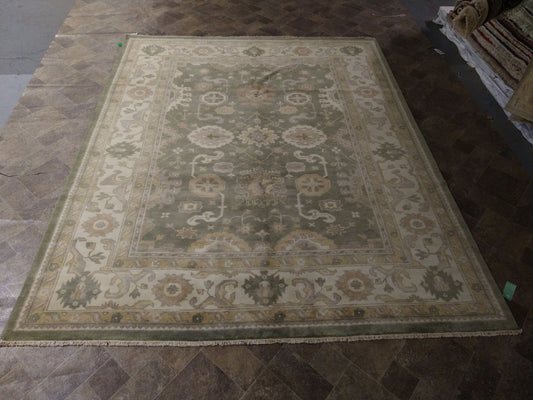
Kashan Rugs: The Classic Persian Medallion Guide
Close your eyes and imagine a Persian rug. Deep red field, an ornate medallion floating in the center, flowers everywhere, elegant to the point of formality. Congratulations, you imagined a Kashan. This is the design that became shorthand for the entire tradition, and there's a reason it earned that job.
Here's the story, the two-second identification, and what separates a fine Kashan from a forgettable one.
The City Behind the Rug
Kashan is an oasis city in central Iran, and it isn't just old, it's foundational. Some of the most celebrated Persian carpets ever woven, the Safavid-era masterpieces from around the 16th century, are attributed to Kashan's workshops; one of them, the Ardabil Carpet, hangs in the Victoria and Albert Museum in London and is among the most famous carpets on earth.
The city's weaving faded and revived over the centuries, roaring back in the late 1800s when master weavers, the story goes, began using fine merino wool imported through Manchester, England, giving the era's "Manchester Kashans" their legendary softness. Since then, Kashan has stayed what it always was: a city workshop tradition, precise, planned, and formal, the opposite pole from village weavings like Heriz or tribal Kazaks.
How to Recognize One in Two Seconds
The formula is consistent: a curved, lobed central medallion, often with pendants hanging from its top and bottom, floating on a field packed edge-to-edge with flowering vines and arabesques. Matching quarter-medallions sit in the four corners. The classic palette is deep red or navy ground with ivory, blue and gold detail, all of it drawn in curves, no straight-line geometry anywhere.
The finish matters too: Kashans are finely knotted with short, velvety pile, so the drawing stays crisp. If a Heriz is a woodcut, a Kashan is a miniature painting.

What Makes a Fine Kashan
Knot density first. Kashans are city rugs, and the whole point of a city rug is precision, flip it over and the back should look tight and even, with the floral drawing legible in the knots. Blurry, chunky flowers mean coarse knotting, which defeats the design.
Then the wool: a good Kashan feels dense but velvety, with a soft sheen, that's the fine-wool heritage. Some top pieces add silk highlights or are woven entirely in silk. Dyes should be deep and calm; the reds lean wine and brick, not orange. And as with every hand-knotted rug, expect slight irregularities and abrash, our authenticity guide covers the full inspection, and it matters more here because "Kashan design" is the single most copied pattern in machine-made rugs. That $250 medallion rug at the big-box store? A Kashan photocopy.
Where a Kashan Belongs
This is a formal rug and it knows it. Dining rooms are the natural habitat, the ornament reads beautifully around a table, and short pile handles chairs well. Formal living rooms, libraries, offices with wood and books, anywhere you want a sense of occasion. Under a chandelier, centered, a Kashan basically runs the room.
Can it work in casual or modern spaces? Sometimes, the trick is contrast and restraint, one Kashan in an otherwise spare room reads as a deliberate art choice. But if your home leans relaxed and rustic, a Heriz or Kazak will fight you less; we compared all the styles in the Persian rug styles guide.

Styling Notes
Pair with dark wood, brass, cream and wine tones, the rug supplies the pattern, so keep upholstery solid. Pull the field's red or the medallion's ivory into curtains or seat cushions and the room clicks together. The one mistake to avoid: sizing down. A formal medallion rug that's too small for the table or seating looks like a doily; check the numbers in the rug size guide, and remember dining rooms need 24 inches of rug beyond the table on all sides.
FAQ
What is special about Kashan rugs?
Centuries of city-workshop pedigree, fine knotting, velvety wool, and the medallion-and-floral design that became the global image of a Persian rug.
How can I tell a real Kashan from a machine-made copy?
Flip it: a real one shows the floral drawing in slightly irregular hand-tied knots, with fringe growing from the rug's structure. Machine copies have uniform grid backs and sewn-on fringe.
Are Kashan rugs expensive?
They sit at the finer end of Persian weaving, so they cost more than village rugs of the same size, but well-kept ones hold value for generations.
What rooms suit a Kashan rug best?
Formal ones: dining rooms, traditional living rooms, offices and libraries. The short pile and ornate symmetry are made for rooms with a centerpiece.
Bottom Line
The Kashan is the Persian rug at its most polished, museum lineage, velvet pile, and a medallion that turns a dining room into a dining room. See our Kashan collection, hand-knotted and certified.