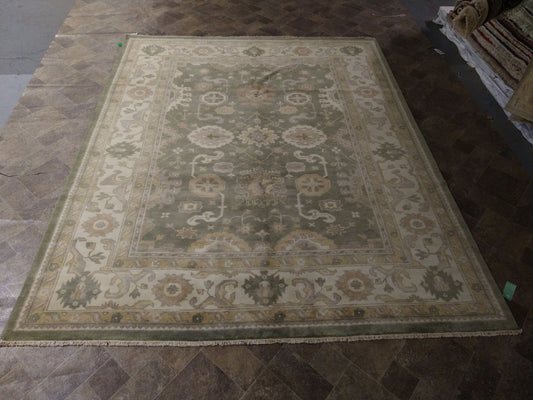
Are Vintage Rugs Making a Comeback? The 2026 Shift
Yes vintage rugs are the single biggest rug story of 2026, and it's less a passing trend than a decisive shift in how people are decorating. Faded palettes, softly-worn patinas and hand-knotted heritage pieces are actively replacing the flat, high-contrast machine-made rugs that dominated the last decade. Interiors are moving toward what designers now describe as collected rather than curated, and vintage rugs are the fastest way to get a room there.
The change is being driven by three genuinely new forces: fast-fashion fatigue with mass-produced homewares, growing awareness that many low-cost modern rugs simply don't last, and a broader design mood that prizes patina, imperfection and history over glossy perfection. This is what a lasting shift looks like, not a colour-of-the-year swap.
Here's what's actually happening, why it's happening now, and how to buy and style a vintage rug well in a modern home.
Is vintage back? Yes the dominant rug trend of 2026 Why now? Fast-fashion fatigue · durability concerns with cheap modern rugs · "collected not curated" aesthetic The look Faded palettes · softly-worn patina · muted earth tones · overdyed vintage Best price bracket Semi-antique (40–80 years) often cheaper than a comparable new rug Style rule Contrast with clean modern furniture never match perfectly
IMAGE 1 — THE 2026 LOOK (top of post) Concept: A warm, aspirational interior photo that instantly conveys the trend. A pale, gently-worn vintage Persian rug in faded rust, ivory and dusty blue anchors a simple modern living room: cream linen sofa, oak coffee table, one linen curtain, plants. The rug is clearly the soul of the room, but the surrounding furniture is clean-lined and restrained. Realistic interior photography, soft daylight. Not staged perfection — feels lived-in. Alt text: faded vintage Persian rug in a modern living room the 2026 collected aesthetic Filename: vintage-rugs-2026-featured-interior.webp
What Counts as "Vintage" (and Where the Overlap Is)
At a glance: vintage typically means 20–50 years old; semi-antique 50–100; antique 100+. Almost all of them are eligible for the current look.
Terminology matters here because sellers blur it constantly. The market broadly uses:
- Vintage rugs: roughly 20–50 years old
- Semi-antique rugs: 50–100 years
- Antique rugs: 100+ years (some markets say 80+)
The 2026 look draws from all three tiers, plus deliberately-distressed and overdyed pieces that read as vintage even when they're technically newer. Faded palettes and softly-worn surfaces are the visual constant, not a specific birth year.
The value angle worth knowing: semi-antique rugs are frequently priced below comparable new rugs, because labour and materials were cheaper decades ago than they are today. It's the quiet bargain of the trade, and it happens to sit exactly in the sweet spot of the current trend. Our antique vs new comparison covers this in detail.
Why the Comeback, Why Now: Three Real Forces
1. Fast-Fashion Fatigue Reaches the Floor
For fifteen years, discount retailers and direct-to-consumer brands trained people to treat rugs as short-cycle décor: a $300 machine-made piece every few years, replaced when the pile flattened or the design felt tired. In 2026, a genuine backlash is landing. Homeowners are actively seeking objects that improve with age rather than degrade, and a hand-knotted vintage rug is the most obvious example.
The design press is clear about it: interiors are "moving away from perfection," and vintage rugs are prized for exactly the qualities mass-produced pieces cannot replicate, patina, subtle irregularity, wear that reads as history.
2. Durability Concerns With Cheap Modern Rugs
The second driver is quieter and more pragmatic: people have noticed that many low-cost rugs simply don't last. Latex backings crack, machine-made pile crushes into permanent traffic paths, and synthetic dyes dull unevenly within a few years. Buyers running the maths are working out that a semi-antique wool rug at $2,000 outperforms three cycles of $600 machine-mades over twenty years, at half the total cost.
That reframing is bringing new buyers into the vintage category who wouldn't have considered it five years ago.
3. "Collected Not Curated" Becomes the Guiding Aesthetic
The visual mood has shifted from magazine-perfect to lived-in and layered. The exact phrase designers keep using, in interviews and design write-ups, is "collected over time," rooms that look assembled slowly rather than bought in one afternoon. A vintage rug is the fastest way to get that reading: it visibly comes from somewhere else and something older, so it prevents the room from feeling styled.

The 2026 Vintage Palette
At a glance: faded, warm, earthy. Cool greys are out. High-contrast geometrics are out.
The specific colour story is remarkably consistent across everything designers are commissioning for 2026:
- Softly faded reds and rust — the classic Persian palette, mellowed by age
- Dusty blues and washed indigos
- Muted terracotta and clay tones
- Ivory, oat and warm beige as new neutrals
- Sage, olive and other green earth tones
- Chocolate brown and charcoal replacing beige and cool grey as foundational anchors
- Overdyed vintage in saturated single tones — deep forest, plum, indigo, ochre — over the ghost of an antique pattern
What's actively out: flat cool greys, harsh whites, high-contrast geometrics, glossy synthetic sheens. If your current rug is a bright cool-grey chevron, it's the piece most flagged as dated right now.
Our rug trends 2026 guide and Persian rug colour guide go deeper on colour.
The Vintage-Adjacent Techniques You'll See Everywhere
Not every 2026 rug is a genuine antique. Three related techniques are giving buyers the vintage look at more accessible prices:
Overdyed vintage rugs. A genuine older rug is neutralised and re-dyed in a single saturated colour deep forest, plum, indigo, midnight blue so the ghost of the antique pattern peeks through a bold monochrome wash. Both traditional and contemporary, and a favourite in transitional rooms.
Distressed / washed reproductions. New hand-knotted rugs finished with a wash that mellows the surface into a soft, aged look. Sold honestly as new, they give you the aesthetic without the fragility or the price of a genuine antique.
Faded classic designs. New hand-knotted rugs woven in intentionally muted palettes soft rust, gentle ivory, dusty blue of traditional Persian and Oushak patterns. Our Chobi and Peshawar rugs sit squarely in this category and are essentially made for this trend.
All three are legitimate; the important thing is that a seller be upfront about which one you're looking at. "Vintage-look" is not the same as vintage.

How to Buy a Vintage Rug Well
Vintage buying is not the same as buying new, and it rewards a specific routine. Five practical checks, in order:
1. Condition first, age second. The universal rule of the vintage trade: age without condition is just age. A pristine 40-year-old rug is often worth more than a worn, repaired 100-year-old one. Check the pile (full, even, or worn?), the foundation (sound, or dry-rotted?), any damage, and any bad repairs. This matters more than the age tag.
2. Origin and materials, in writing. A real vintage rug from a reputable dealer comes with stated origin, materials and approximate age. Vagueness on any of the three is an answer.
3. Genuine handwork. The five authenticity checks still apply flip it, look for the pattern on the back, check the fringe grows from the warp, look for abrash, run the wool test.
4. Price per square foot. Genuine hand-knotted vintage in the US market lives roughly at $50–$200 per square foot, same as the general Persian rug bracket. Deep discount pricing on "vintage Persian" almost always means the piece isn't what the label says.
5. Sniff test, literally. Vintage rugs sometimes carry smoke, mildew or storage odours. Fixable, but you should be told about it and factor it in.
Our Persian rug price guide covers valuation in full.

How to Style a Vintage Rug in a Modern Home
This is where a lot of buyers get nervous, so let's make it concrete. The 2026 approach isn't "vintage room" it's one vintage rug against clean, modern surroundings. The contrast is the whole point.
Contrast, don't match. A faded vintage rug against a cream linen sofa, oak coffee table and pale plaster walls is the exact look designers are commissioning. If everything in the room is old, the rug disappears into the antique clutter. If everything else is spare, the rug becomes the soul of the room.
Pull one accent colour into pillows or art. Not three or four one. If the rug has muted reds, one rust cushion. If it carries dusty blue, one blue vase. That single echo tells the eye the rug belongs, without over-coordinating.
Layer over jute. A vintage rug too small for the room? Put a large jute or sisal base under it. It's the current move, and it's practical: you get correct floor coverage cheaply, and the vintage rug becomes the star on top. See our rug layering guide.
Don't over-decorate around it. The rug is doing the work. Restraint everywhere else. This is the mistake that turns "collected" into "cluttered."
Warm the surroundings. Linen, wood, brass, ceramic, wool the material palette that lets a vintage rug sing. Chrome, glass and glossy white surfaces will always fight it.

Care and Longevity
A well-cared-for vintage rug doesn't just survive it improves. Full pile, natural dyes and honest wool age into a richer surface over decades. Basic routine:
- Vacuum weekly, no beater bar
- Rotate twice a year so wear spreads evenly
- Use a rug pad mandatory on hard floors
- Blot spills immediately with cold water; never vinegar, bleach or hot water on wool details in our wool rug stain guide.
- Professionally clean every 1–2 years for antiques; every 3–5 for semi-antiques
- Inspect annually for moths the one real risk to older wool
Insure any vintage rug over roughly $3,000. Standard home policies often have sublimits that leave a good rug underinsured.
IMAGE 6 — TRAJECTORY OF THE SHIFT (place here) Concept: A simple, elegant line chart over roughly 2015–2030 showing designer/consumer interest in three categories: cool grey machine-made rugs (rising through 2018, plateauing, falling from 2022), warm neutrals and traditional (steady rise), and vintage/faded rugs (sharp rise from 2022, accelerating through 2026). A shaded "2026 inflection" band highlights the current moment. Editorial chart styling, honest slopes, cream ground. Alt text: designer interest in vintage rugs rising sharply from 2022 into 2026 Filename: vintage-rugs-trend-trajectory-2026.webp
FAQs
Are vintage rugs in style in 2026?
Yes. Vintage and antique rugs are the dominant rug trend of 2026, driven by fast-fashion fatigue with mass-produced homewares, growing awareness that cheap modern rugs don't last, and an aesthetic shift toward rooms that feel "collected over time" rather than perfectly styled.
Why are vintage rugs so popular right now?
Because they deliver qualities machine-made rugs cannot real patina, subtle irregularity, natural-dye mellowing and a visible sense of history. In an interior mood that prizes lived-in warmth over perfection, that authenticity is exactly what people are buying.
Are vintage rugs a good investment?
Well-chosen vintage and semi-antique rugs typically hold or gently appreciate over decades, particularly documented pieces in good condition. Treat them as a store of value rather than a growth investment, and their per-year cost often beats replacing cheaper machine-mades.
How much do vintage rugs cost?
Genuine hand-knotted vintage rugs generally run $50–$200 per square foot at retail the same bracket as new Persian work. Semi-antique pieces are often the value sweet spot, sometimes priced below comparable new rugs of the same quality.
What's the difference between vintage, antique and overdyed rugs?
Vintage typically means 20–50 years old; antique 100+ (some markets say 80+); semi-antique fills the gap. Overdyed rugs are genuine older rugs re-dyed in a single saturated tone so the original pattern shows faintly through. All three sit within the 2026 trend.
How do you style a vintage rug in a modern home?
Contrast rather than match. Set the vintage rug against clean modern furniture linen, oak, pale walls so it becomes the soul of the room. Pull one accent colour from the rug into pillows or art, layer over jute if it's small, and keep everything else restrained.
Summary
Vintage rugs are the biggest rug story of 2026, and it's a genuine shift rather than a passing trend. Faded palettes, softly-worn patinas and hand-knotted heritage are actively replacing flat machine-made rugs, driven by fast-fashion fatigue, real durability concerns with cheap modern pieces, and a "collected not curated" aesthetic that prizes history over perfection.
Buy on condition first and origin second, spend where the semi-antique bracket sits, and style with contrast rather than match. Get those right, and the rug will still be in your family when the current trend cycle is a footnote.
Browse our hand-knotted vintage and semi-antique collection origin, age and condition stated honestly on every piece.